


Disability-Selective-Abortion in International Human Rights Law – Stereotypes and Stereotyping under Art. 8 CRPD
The research project

Worldwide, national legislation on the termination of pregnancy abounds in laws differentiating between foetuses with or without disability, providing for Disability-Selective-Abortion (DSA). This research project delves into the complex and contentious issue of DSA through the lens of international human rights law, with a particular focus on the implications of stereotypes and stereotyping as outlined in Article 8(1)(b) of the Convention on the Rights of Persons with Disabilities (CRPD). The research examines the legal admissibility of DSA by exploring and analysing its intersection with women's reproductive rights and the rights of persons with disabilities. To this end, this research project will mirror a recent shift in the argumentation against DSA, emphasizing its impact on the rights and interests of persons already born with disabilities rather than on potential rights of the unborn. Thus, examining the legal implications of harmful stereotypes and wrongful stereotyping of persons with disabilities as a human rights issue as anchored in Art. 8(1)(b) CRPD in the context of DSA will be the core research focus of this project.
This requires a thorough understanding of international human rights law. To achieve comprehensive and universal results, the project must engage with scholarly work, jurisprudence, and domestic legislation from various regions of the world to identify commonalities and differences. When analysing the normative content of international human rights treaties ratified by numerous states, it is important to consider regional peculiarities to ensure that the assessment is not solely influenced by the 'familiar' human rights system.
What I need the IRB for
The IRB will allow me to conduct research stays in regions with different human rights systems, to explore the differences and similarities, and to expand my research network beyond Europe. At the same time, it will allow me to present, discuss and critically reflect on my research with colleagues from around the world in order to achieve a truly international understanding of the law. In short, the IRB is going to help me to become an international lawyer who conducts research truly internationally.
IRB funded activities
Conference stay in Pretoria, South Africa (4-7 December 2024)
Funded by the IRB, I attended an international conference on regional approaches to the business and human rights agenda in Pretoria, South Africa. The workshop brought together many renowned scholars from different regions of the world and sparked many interesting points of exchange and discussion. I had the opportunity to present on the obligations of media companies, particularly in relation to stereotypes and the obligations under the UN Convention on the Rights of Persons with Disabilities. As part of the conference programme, we also visited the Apartheid Museum in Johannesburg and, while learning about these important lessons from the past, discussed contemporary issues such as modern slavery and forced labour.
All in all, the conference not only expanded my research network beyond Europe, but also allowed me to engage with several experts in the field of business and human rights and to discuss my ideas on the relevance of stereotypes in this field. I will also have the opportunity to further develop my presentation into a contribution to the edited volume that will now be developed from the workshop inputs, incorporating all the fruitful feedback I received during the conference.
2025 Ljubljana Conference on Comparative Equality & Anti-Discrimination Law (2-4 July 2025)
At the 12th Annual Conference of the Berkeley Center on Comparative Equality &Anti-Discrimination Law, hosted by University of Ljubljana, Slovenia & Advocate of the Principle of Equality, I presented a paper titled "Formal, Substantive and Inclusive Equality: The Understanding of Equality as a Tool to Combat Stereotypes."
My presentation explored how different conceptions of equality shape the protection of fundamental rights, with a particular focus on gender and disability equality. Using Article 3 of the German Basic Law as a case study, I examined the underlying equality concept embedded in German constitutional law and analyzed its implications on the right to
(inclusive) education. During the presentation I explored the potential of these equality concepts to recognize and dismantle structural discrimination and stereotypes and promote social transformation. The conference gathered over 200 participants from academia and equality practice across the globe, fostering rich interdisciplinary exchange. My participation was generously funded by the IRB.
Research Stay to Explore Regional Latin American Human Rights Discourse (16 February to 13 March 2026)
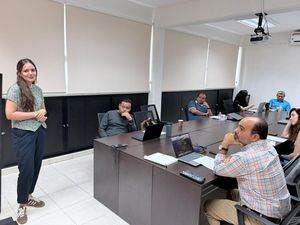
Supported by IRB funding, I had the opportunity to undertake a combined research stay across the Latin American region in order to deepen and diversify my research on regional human rights approaches to stereotyping.
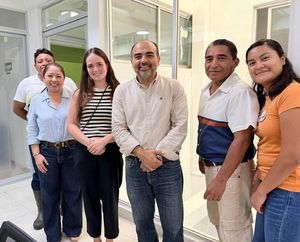
From 16 February to 13 March, I conducted a four-week research stay at the library of the Inter-American Court of Human Rights in San José, Costa Rica, the judicial body with the most extensive jurisprudence on stereotypes and stereotyping. During this period, I benefited from the Court’s extensive resources to strengthen the doctrinal dimension of my analysis of the Court’s approach to stereotyping. At the same time, I had the opportunity to discuss my findings with scholars and practitioners affiliated with the Court as well as with academic institutions across the region, which provided valuable regional perspectives on my research.
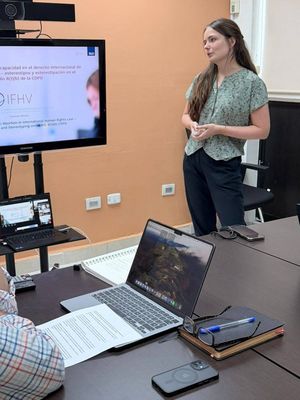
Subsequently, from 6 April to 29 May, I conducted a research stay at the University of Campeche (UAC), Mexico at thze Institute for judicial and political research (IIJP) under the supervision of Prof. Dr. Alejandro Sahuí. The interdisciplinary research institute provided a fruitful environment to further reflect on and diversify my research while expanding my academic network in the region. During my stay, I presented my research to academic staff and received valuable feedback that helped challenge and refine my arguments and broaden my perspective. I also participated in numerous academic events and exchanges that facilitated engagement with local and regional debates. In particular, these discussions significantly contributed to expanding my literature base by incorporating further Spanish-language scholarship, which often remains underrepresented or less visible in international human rights discourse despite its relevance for the field.
Building on this exchange, further cooperations between IFHV and IIJP are envisaged.
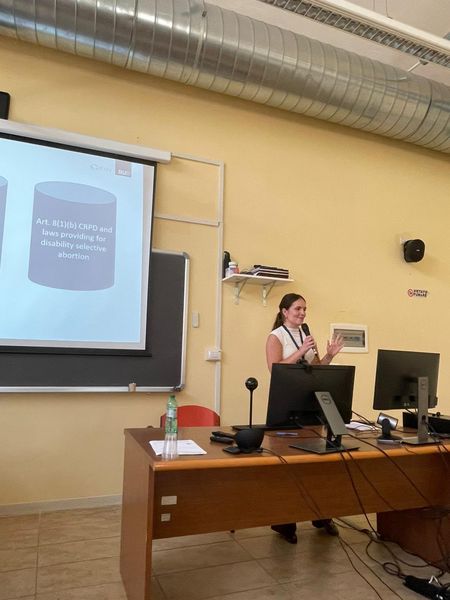
Conference Stay Italy (17-19 June 2026)
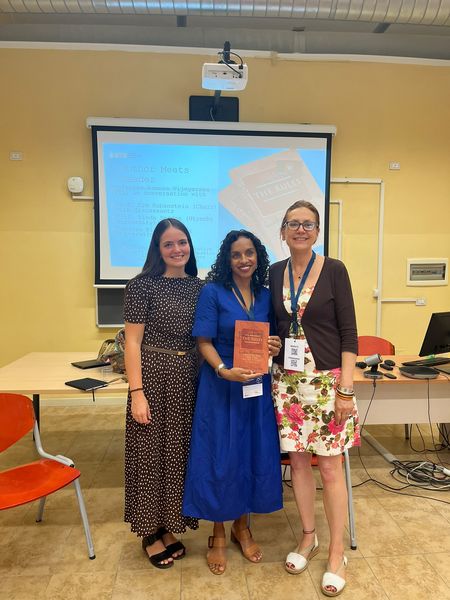
At the 13th Annual Conference of the Berkeley Center on Comparative Equality & Anti-Discrimination Law, hosted by the University of Tuscia in Viterbo, Italy (17–19 June), I presented key findings from my doctoral research in a presentation titled Disability-Selective Abortion and the Role of Stereotyping in International Human Rights Law: The CRPD Framework.
As part of the panel Reproductive Justice, Care, and Gendered Harms, I explored the role of disability stereotypes in legal approaches to disability-selective abortion and examined how the Convention on the Rights of Persons with Disabilities (CRPD) provides a framework for addressing these stereotypes while simultanously protectin reproductive autonomy. Further, I participated as a panelist in a presentation of the book "Rewriting the Rules: Gender-Responsive Lawmaking for the Twenty-First Century" from Prof. Ramona Vijeyarasa from the University of Technology Sydney, a former Visiting International Professor at IFHV.
The conference brought together international scholars and practitioners working across comparative equality and anti-discrimination law and offered an excellent opportunity for exchange and frutiful discussions.